
Artist Profile Kenji Ichikawa
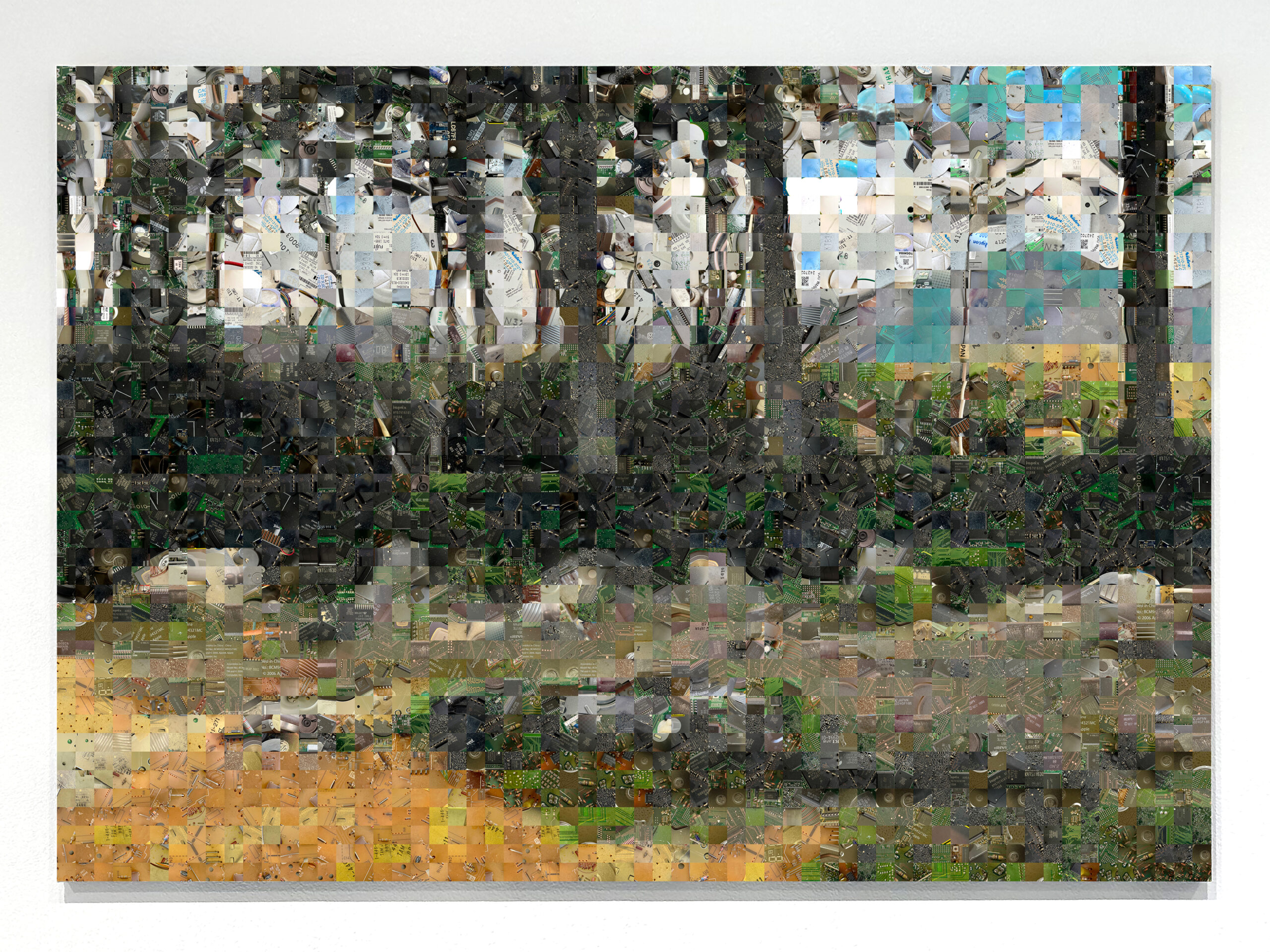
Kenji Ichikawa, Zen Garden (Entsuu-ji Temple Shakkei Garden), 2024, Photo print, hand-cut collage on wooden panel, 23.4″ × 33.1″ × 1″ (594 mm × 841 mm × 25 mm).
Ichikawa’s meticulous work synthesizes the organic serenity of Japanese landscape with the digital logic of modern connectivity.
Artist Statement
Entsuu-ji Temple’s garden is celebrated for its “Shakkei,” or borrowed scenery, which integrates the distant Mount Hiei into its design. I photographed the near elements of stones and moss as well as the far-reaching mountains, then reassembled these layers in a pixelated collage. Electronic circuits similarly extend beyond their physical boundaries, visually borrowing space as their components connect in a wider network. By fragmenting and reconstructing the borrowed view of Mount Hiei, this work emphasizes the layered harmony between nature and human design. It reflects how Zen gardens transcend their physical limits, much like circuitry transcends its board, creating an expansive visual and spiritual dialogue.
Artist Biography
Kenji Ichikawa is a contemporary Japanese artist based in Tokyo and Nagano, known for developing the unique technique “Pixel Montage” in 1988. This method involves cutting printed photographs into small squares and reconstructing them by hand to create entirely new images. His work explores the interplay between micro and macro perspectives, transforming fragments into visually compelling stories. Over the years, Ichikawa has exhibited internationally, including in Venice (Arte Laguna Prize), Germany (NordArt), and upcoming shows in Shanghai and Osaka. The “Zen Garden” series is a continuation of this artistic journey, inspired by the tranquil beauty of traditional Japanese temple gardens and their philosophical connection to harmony and nature. In this series, Ichikawa reimagines Zen gardens through his handcrafted Pixel Montage technique. Each piece is constructed from meticulously trimmed photographs, capturing both the serenity of Kyoto’s temple gardens and the intricate visual order reminiscent of electronic circuits. The works invite viewers to experience Zen gardens from dual perspectives—up close, revealing detailed fragments, and from afar, perceiving a harmonious landscape that bridges tradition and modernity.