
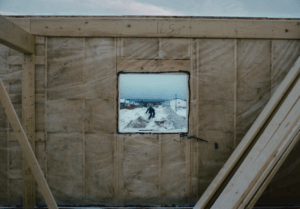
Homiens Spring 2025
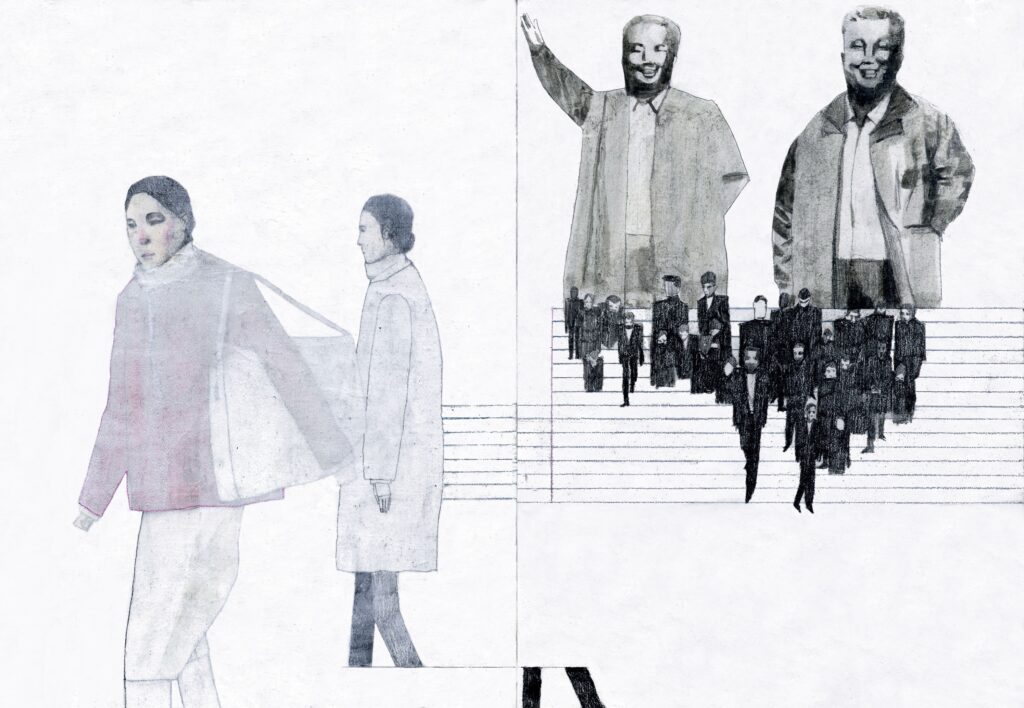
Lily Li, The One Who Walked Away, 2025, Wood panel, fiber gesso, watercolor, and color pencil, 14″ x 22″ (356 mm × 559 mm).
Our Spring 2025 artists are visionaries who stand out for their adventurous, courageous, and intelligent interventions and rewarding dedication to novel, inventive forms. Their technical ability and deep conceptual rigor allow them to execute material and conceptual experimentation with affecting and exquisitely unconventional results, all while wrestling with material and metaphysical concepts in captivating ways.
These pieces achieve synthesis by melding tradition with cutting-edge futurity. They explore grand themes, from the resilience of humankind to a transgenerational interest in posterity, yet often deliver articulate and vulnerable insights as condensed and intimate treasures. We were impressed by the ability of these artists to bring vastly different artistic and creative processes together, often using one mode of making as a fascinating gateway through which to approach another. At times, these artists delightfully subvert our expectations regarding an artwork’s surface, or its engagement with space, while achieving a satisfying and expansive sense of balance.
The Homiens Art Prize is Now Open
Floris Boccanegra
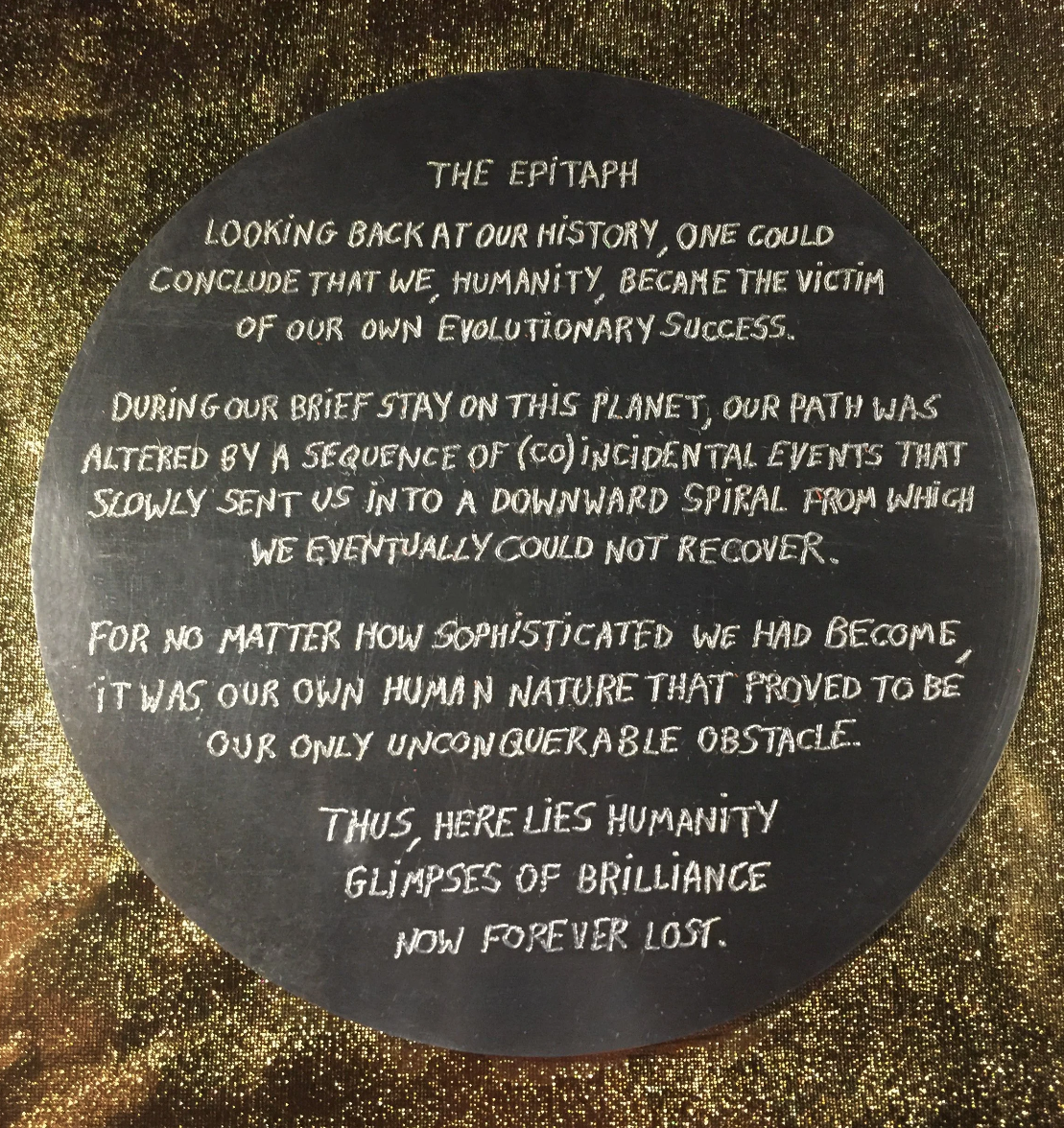
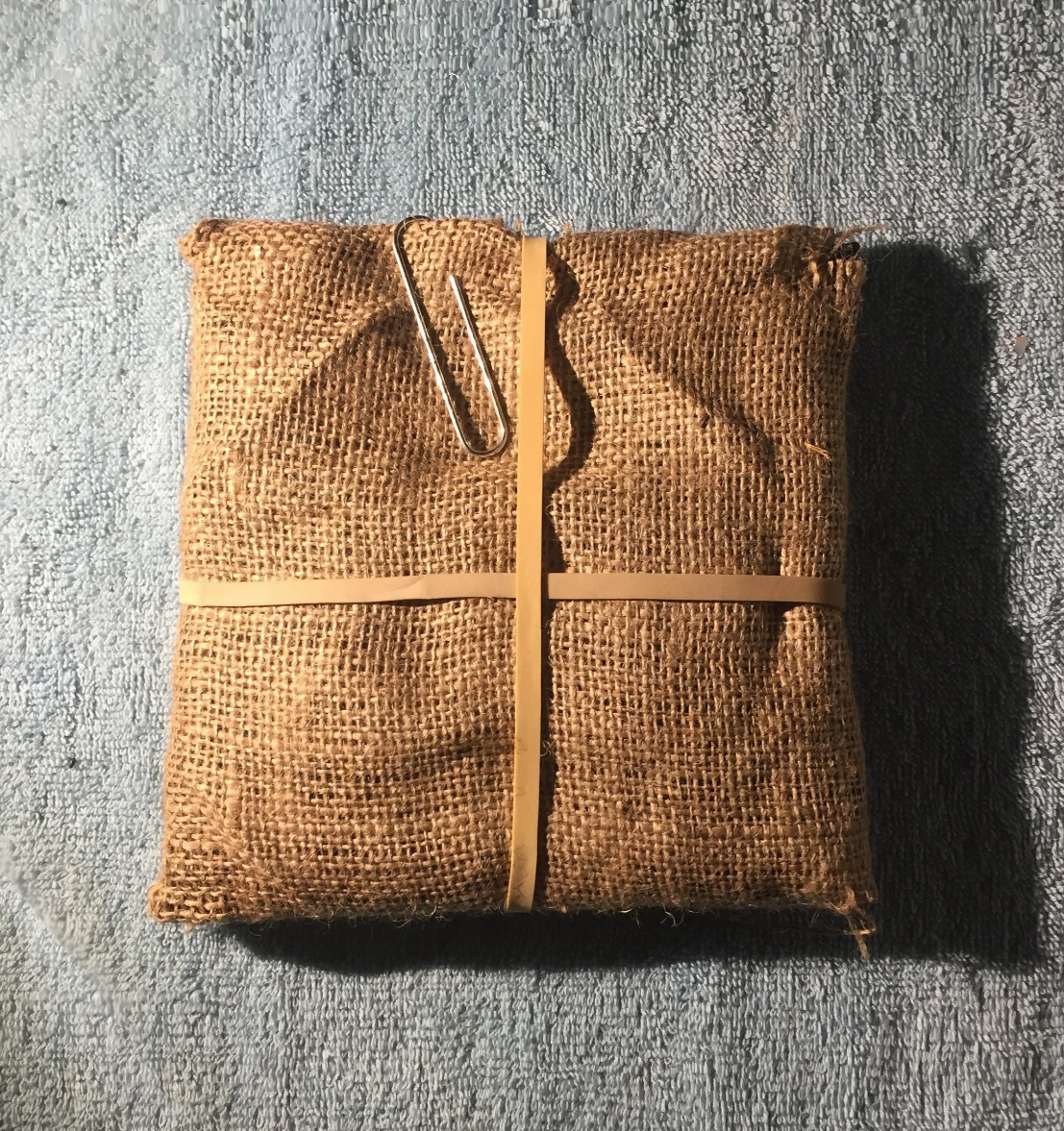
The Epitaph 2018
Video and engraved aluminum disc (framed)
Duration 00:09:53, 7.9″ x 11.8″ (200 mm x 300 mm)
Artist’s Statement: The Epitaph is an art intervention that took place on top of the Pyramid of Khafre in Cairo, Egypt. Using a drone on the morning of October 13, 2018, Boccanegra secretly placed a disc with an engraved message on the pinnacle of the pyramid.
The central premise of The Epitaph is the inevitable self-destruction of humanity. While Boccanegra intentionally leaves the specifics open to interpretation, he believes that our human nature ultimately stands in the way of our survival. As intelligent animals, we are driven by self-interest, shortsightedness, and greed, characteristics that have shaped our progress but may hinder our future unless we find a way to transcend them.
The inspiration for The Epitaph stems from the Golden Records attached to the Voyager space probes launched by NASA in 1977. These records were intended to represent Earth’s diversity of life and culture to potential extraterrestrial beings. However, he found the portrayal of our species in those records inadequate and questioned the likelihood of receiving a response from extraterrestrial life given the vast timeframes involved.
With this in mind, Boccanegra decided to leave a message not for potential aliens but for the people of today. He wanted to confront them with the possible consequences of humanity’s impact on Earth. The concept was to create a simple and concise message that would reflect what happened to us as a species. Although Boccanegra doesn’t believe in the existence of extraterrestrial life, he utilized the story of the Golden Record as a symbolic framework upon which to hang his own narrative.
Boccanegra chose the Pyramid of Khafre as the site for his intervention after considering what would happen to Earth in the absence of humans. The enduring pyramids of Giza, monumental stone structures dating back approximately 4,500 years, symbolized the lasting presence of humanity’s creations. To ensure the disc’s placement without causing damage to the pyramid, a drone was employed during the early hours of the day when tourists were absent, minimizing risks for all involved.
Through The Epitaph, Boccanegra seeks to ignite reflection and dialogue about the precarious nature of humanity’s existence and our role in shaping the world. By leaving his message atop the Pyramid of Khafre, he hopes to communicate, in an indirect manner, with present-day individuals, confronting them with the potential consequences of our actions and urging us to consider the legacy we will leave behind.
Belgian artist Floris Boccanegra (Roeselare, 1988) is a conceptual artist who currently resides and works in Brussels, Belgium. Growing up, Boccanegra was drawn to his parents’ bookshop, often losing himself in the history section. It was there he discovered the yearly edition of World Press Photo, whose powerful imagery sparked a lasting urge to tell stories and engage with contemporary global issues in a strong visual way.
Although Boccanegra initially dreamed of becoming a photojournalist, his path led him to study History and English at Ghent. Yet, the need to express himself and share narratives through art remained a constant presence. By the age of 25, his creative drive culminated in his first major project, Machete Season.
Since then, Boccanegra has developed a diverse body of mixed media works that confront global challenges head-on.
Driven by an unyielding passion and using art as his medium, Boccanegra continues to explore the urgent issues facing our world today.
Sandra Cavanagh
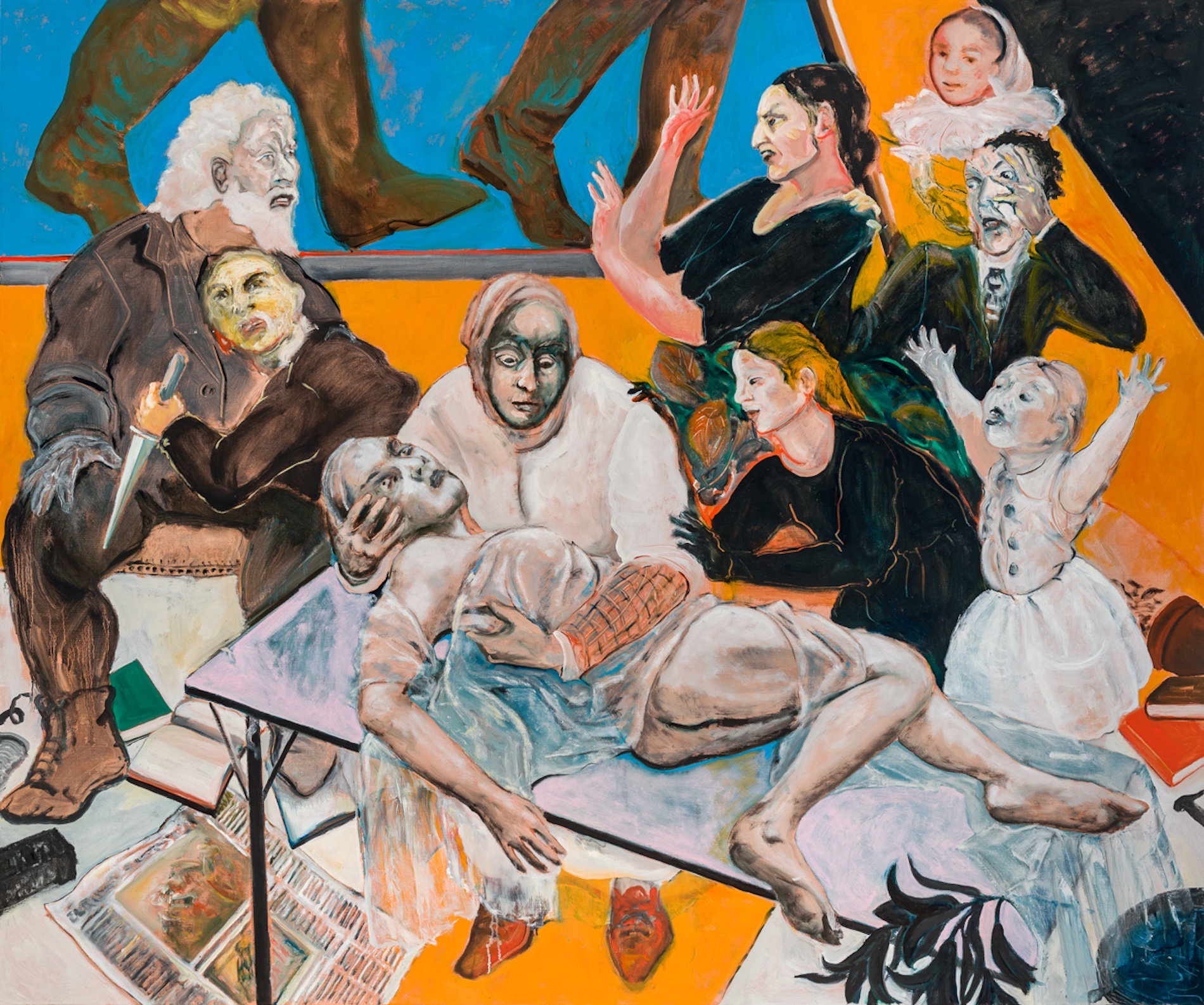
After Eden III, Fratricide 2024
Oil on canvas
60″ x 72″ (1524 mm x 1829 mm)
Artist’s Statement: I sustain a mostly figurative focus in reaction to current and historical narratives, including my own. Recent global events have led me to considerations of mortality and loss of innocence in transgenerational stories, the usefulness of art’s centuries old regard of myth, foundational stereotypes, and the mundane occurrence of violence.
Maintaining a consistent practice, I’ve developed a large portfolio of work including paintings, drawings and prints. I take intervals with the painting of still life and portraiture.
Growing up in Argentina I experienced life in a police state, fear of uniformed authority and suspicion of government. This fundamental break of trust in the state led at least to the ideals of militancy and an interest in a politically engaged art. To date, societal events such as injustice, violence, gender inequality continue to be a source for the narratives I develop on paper and canvas.
Interested in the pairing of form and message, and formal variations on a theme, I have often worked in series, creating pictorial storylines with some urgency to exhaust the subject and form to the point of understanding or unburdening myself of it. The result is an annotation of feelings and opinions underscoring a dramatic approach to form and message.
Sandra Cavanagh was born in Buenos Aires, Argentina. Her early life was pitched on a growing awareness of the prevailing political instability, an overbearing patriarchal society and the dangers of state sanctioned brutality and censorship. Cavanagh read Social Sciences at the University of Belgrano, emigrated to California and later to the UK. She is a Fine Art graduate from K.I.A.D, University of Kent. Since 2010 she’s worked and resided in New York City.
Jessica Di Costa
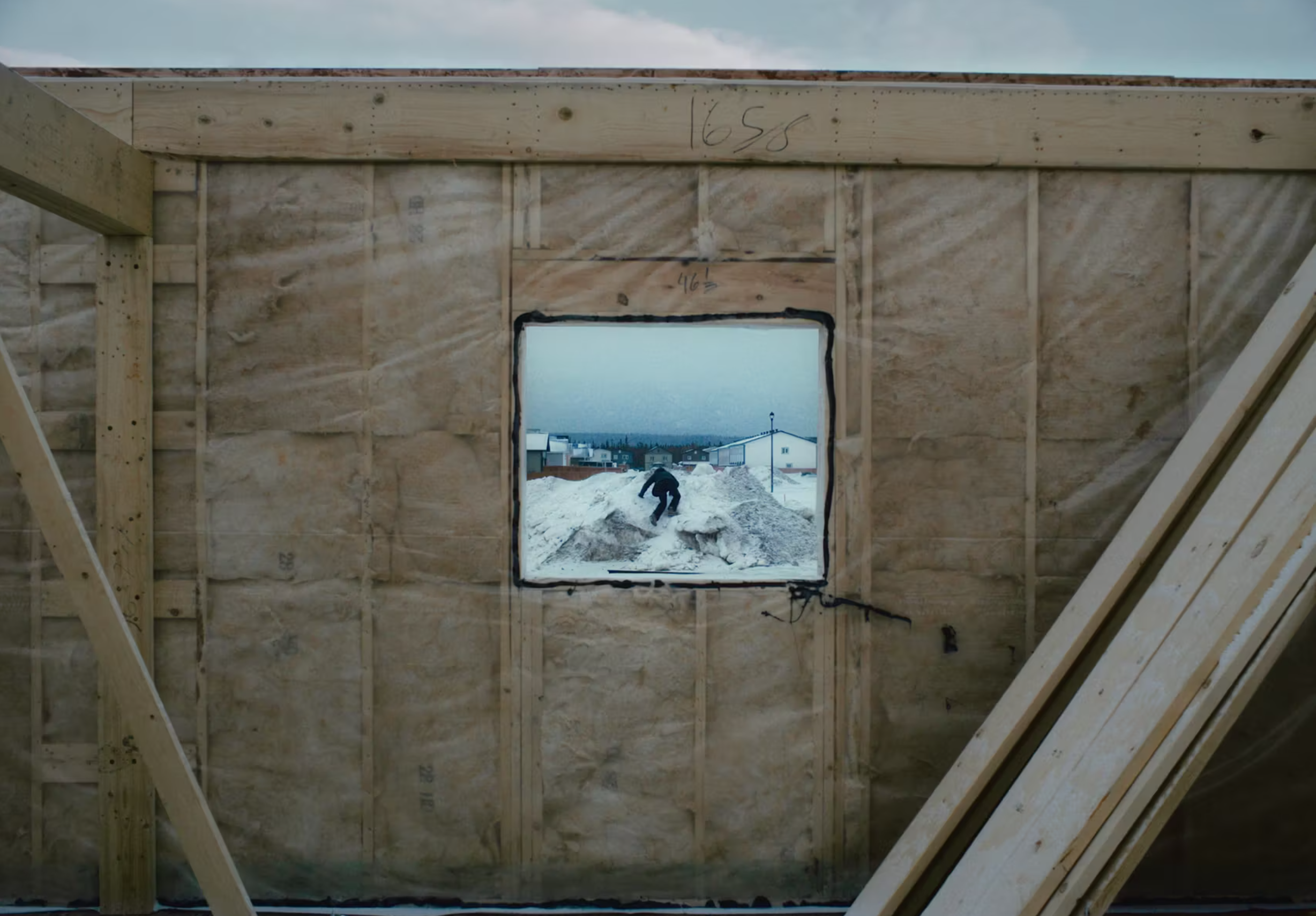
KOMA 2024
Video art (color, digital)
Duration 00:10:34, dimensions variable
Artist’s Statement: KOMA captures the poignant transformation of a small town amidst gentrification as it navigates the delicate dance between progress and preservation. Through an observational lens, it reflects on the evolution of local identity as the physical world evolves. As buildings rise and forests recede, new neighbourhoods are made, while others forgotten, amid concrete and walls echoes of nature and community persist. This work is a visual testament to the resilience and adaptation of both the natural world and human connection in the face of inevitable change.
Jess is a Sydney-based filmmaker and visual artist. She graduated with First-Class Honours from COFA (UNSW) and was one of 30 students nationally selected to exhibit her graduating film APARTMENT BLOCK NO’ 10 at the Perth Institute of Contemporary Art. In 2019, she received a scholarship from the San Sebastián International Film Festival to complete her master’s in Film Creation at the experimental Elías Querejeta Zine Eskola in Spain.
Her work has since screened nationally and internationally at SXSW Sydney, St Kilda Film Festival, Arte Laguna Prize (Venice), Cannes Art Film Festival, Venice Film Week, and more. She’s received multiple accolades including the inaugural TWT Excellence Award and the Tony White Memorial Art Award.
In 2023, Jess was one of 50 global filmmakers selected for PlayLab Film’s ‘Creator’s Lab’ in Mexico, mentored by Apichatpong Weerasethakul. Her film SEE ME LIVING was one of 10 chosen for international distribution in 2024.
In 2025, Jess will undertake a Fellowship at the Cité Internationale des Arts in Paris. She is currently developing her debut feature, WHEN MAMA WAS MOTH.
Website
Instagram
Email
Harleigh English Cinematographer
Website
Instagram
Email
Sam Holman Colorist
Website
Instagram
Email
Jessica Meier Sound Designer
Website
To Kill A Dead Man: Musical Score
Email
Vincent Driscoll
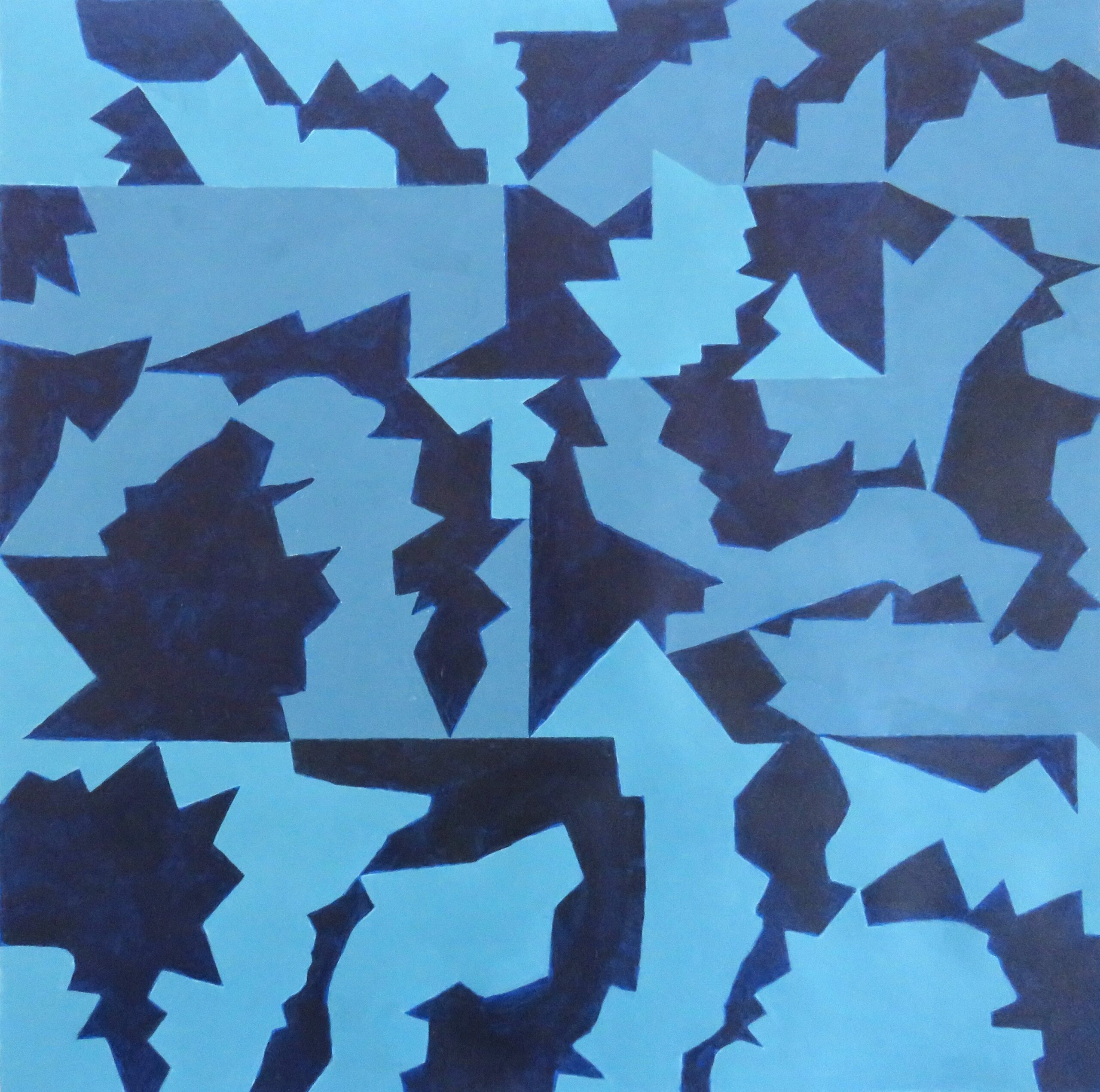
Everything At Once #4 2025
from Everything At Once series
Acrylics on paper
16″ x 16″ (400 mm x 400 mm)
Artist’s Statement: This painting, as all my work tends to, has a minimal palette and is square to avoid any resemblance to landscapes or portraits. I think of my paintings, indeed, all abstract painting, as aesthetic machines, autonomous from the visual world we inhabit. I work in series, allowing me to explore a specific idea or approach in depth across multiple works.
This is the fourth iteration in my Everything At Once series and explores the dynamic interplay between space and colour, striving for a poetic intensity. I have attempted to create an image that flows, without dominant focal points or visual hierarchies. Three blues with narrow tonal values, carefully proportioned 50/25/25, create a restless yet harmonious rhythm. The graphic clarity and bold contrasts between the calming blues and the energetic forms, give it a dynamic edge.
Painting what I’ve never seen is always an adventure and a thrill, especially when the results pleasantly surprise me. But a painting isn’t truly complete until it’s on a wall, enhancing a space and being enjoyed. I hope this painting offers the spectator a new, unique experience, one that touches hearts as it engages minds.
Vincent Driscoll is an independent artist making and selling abstract paintings. He was born in 1963 in Lambourn, England in the ancient kingdom of Wessex. He is an alumnus of Chelsea and Goldsmiths Colleges in London and has practiced his art since the 1980’s, exhibiting frequently in the UK. He lives in Portsmouth on the English south coast.
Lily Li
The One Who Walked Away 2025
Wood panel, fiber gesso, watercolor, and color pencil
14″ x 22″ (356 mm × 559 mm)
Artist’s Statement: The staircase, symbolizing the unknown, is deliberately depicted as a sketch, suggesting the malleability of history and reality. The shadowy figures, nameless and uniform, form the foundation of the authoritarian statues, representing both victims and unconscious collaborators in the power machinery. The figures on the left, though unable to change the status quo, challenge it by simply choosing to escape, maintaining a dynamic balance within the social structure. This piece conveys that true balance arises from individual resistance and questioning of power, even if it’s just one step away from conformity.
Lily Li is a freelance illustrator at the School of Visual Arts (SVA) in New York. Her artistic practice focuses on social issues, inequalities, and the human experience, often using watercolor, pencil, gesso, and mixed media. Lily’s work invites reflection on contemporary challenges, such as political and societal structures, exploring the tension between individual agency and oppressive systems. Her illustrations often feature symbolic elements and intricate narratives, highlighting marginalized voices and critiquing power dynamics. Currently, she is expanding her portfolio to include character design, scene painting, and other design-related fields, aiming to strengthen her position as a designer and illustrator. Lily’s creative process is driven by a desire to provoke thought, inspire change, and push the boundaries of traditional illustration and fine art.
Asuka Akagawa
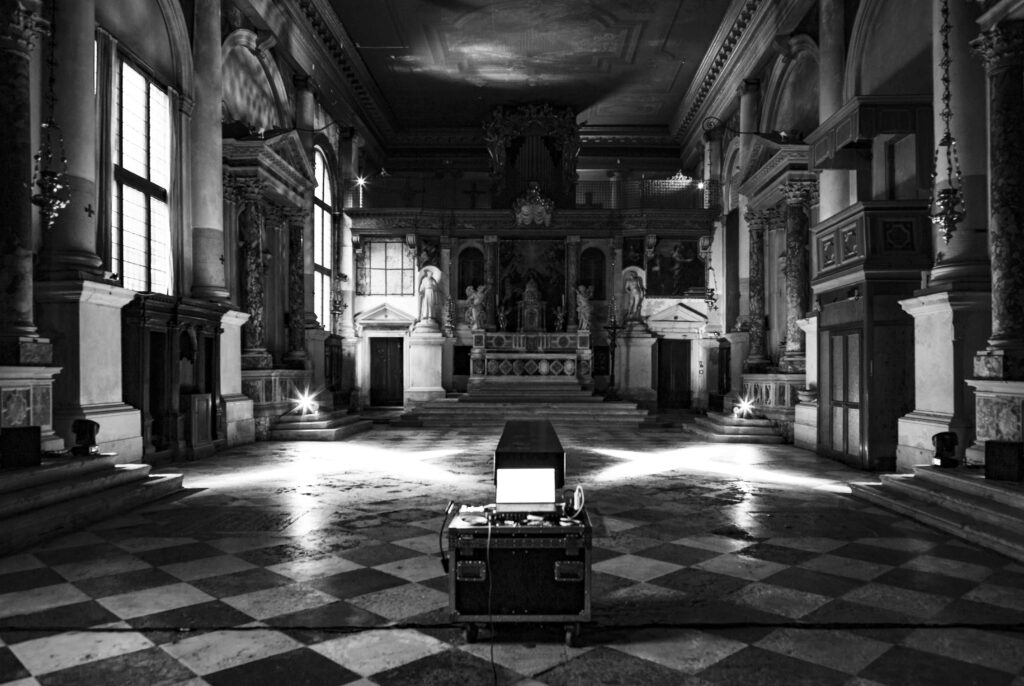
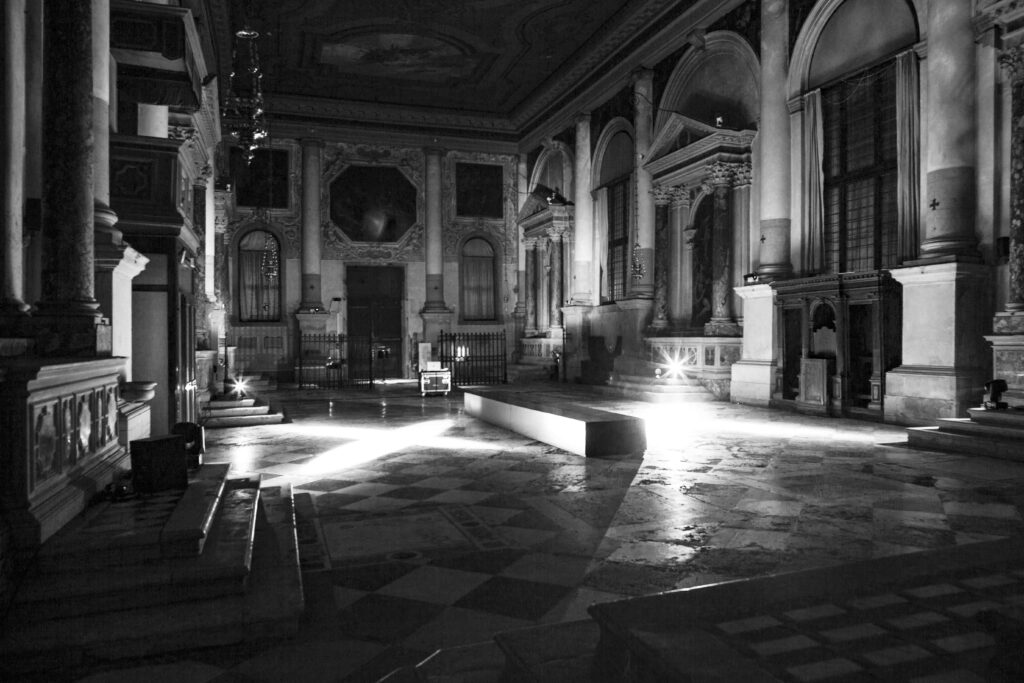
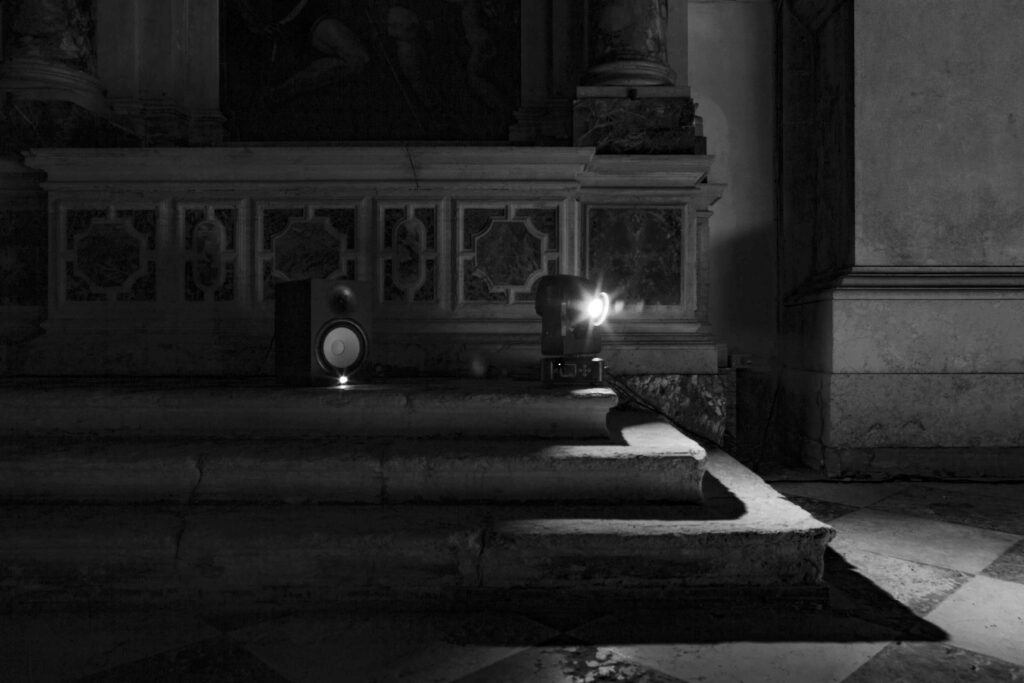
No amaro è il tormento II, October 13–29, 2023
Site-specific interactive/generative quadraphonic audio, and dmx lights installation/performance
Complesso dell’Ospedaletto, Venice, Italy
Duration 00:06:48
Asuka Akagawa is a Japanese interdisciplinary artist with a background in composition and guitar performance. He combines sound, visuals, generative systems, interactivity, and performance to figuratively or symbolically manifest fundamental, underlying, and potential social issues and demonstrate possible alternative mindsets. Despite the elaborateness of his practice, Asuka’s outputs remain minimal and primitive, incorporating only enough elements from eclectic sources.
Asuka holds a dual major Bachelor of Music in Jazz Composition and Guitar Performance from Berklee College of Music, Boston, Massachusetts, and was previously a senior artist in residence, project coordinator, audiovisual technician, and sound designer at Fabrica (Benetton Group’s communication research center) in Treviso, Italy.
Website
Soundcloud
Facebook
Email
Carlos Casas Direction and Curation
Angela Quintavalle Communication
Andrea Palladio Architecture
Marta Celoso Production
Loredana Rigato Communication
In collaboration with Venezia News
Daniela Mesina Production
The Dee Group Site Setup
Marta Belogolova
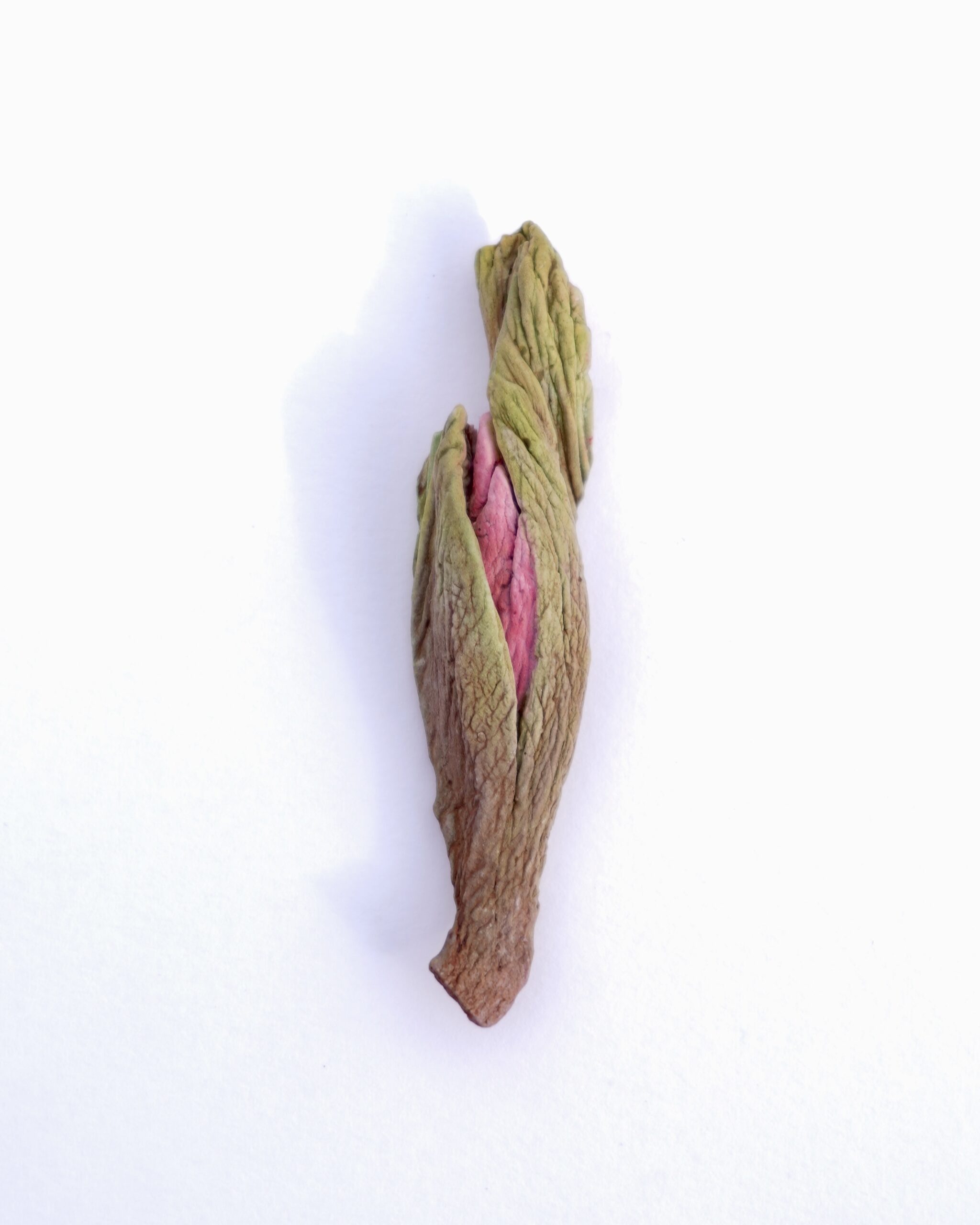
Florifera 2025
from the Organic project
Mixed media, colorant on plaster
2.76″ x 0.63″ x 0.39″ (70 mm x 16 mm x 10 mm)
Artist’s Statement: This world of cosmic complexity and infinite uniqueness fascinates me. Inspired by the organic unity visible to the human eye, I contemplate how the world is composed. Looking into textures and surfaces, I study infinite patterns, connections, and ambiguous signs of biological activity. Everything, subject to fundamental forces, manifests resemblance through its worldly origin. Meanwhile, despite the endless earthly plurality, uniqueness is an inevitable aspect of existence.
Florifera is a painted vulva cast celebrated as a flower bud. As part of the Organic project, it looks into our visual resemblance with nature, hinting at an intricate connection through shared forms and patterns. I capture the uniqueness of real human bodies and combine them with heterogeneous colors and variegations of the natural world. By taking the body out of context, fragmenting it, and modifying only some aspects, I create an abstract image while preserving the hyperrealism of details. The artwork shifts visual perception, inviting new insight. The project channels the healing powers of nature by emphasizing the beauty of diversity and unity of existence.
Marta Belogolova is an international multidisciplinary hyperrealist artist. She was born in 2000 in Saint Petersburg, Russia, and studied at the local art school named after B.M. Kustodiev until 2011. Later, she moved to Lugano, Switzerland, where she focused on developing her painting style at the Ferit Şahenk Fine Arts Center. From 2018 to 2020, she studied Art History at Saint Louis University in Madrid, Spain. In 2024, she graduated from Middlesex University in the UK with a BA in Fine Art. From 2021 to 2024, she participated in several exhibitions and art projects in London. Marta began as a painter but progressed into experimenting with multiple mediums and techniques. Her current Organic project encompasses mixed media, sculpture, painting, gilding, printmaking, and game building. Marta’s art explores the compositions of natural patterns, variegations, and the cosmic complexity hidden in ordinary things. She aims to shift our perception.
Marcel Dirkes
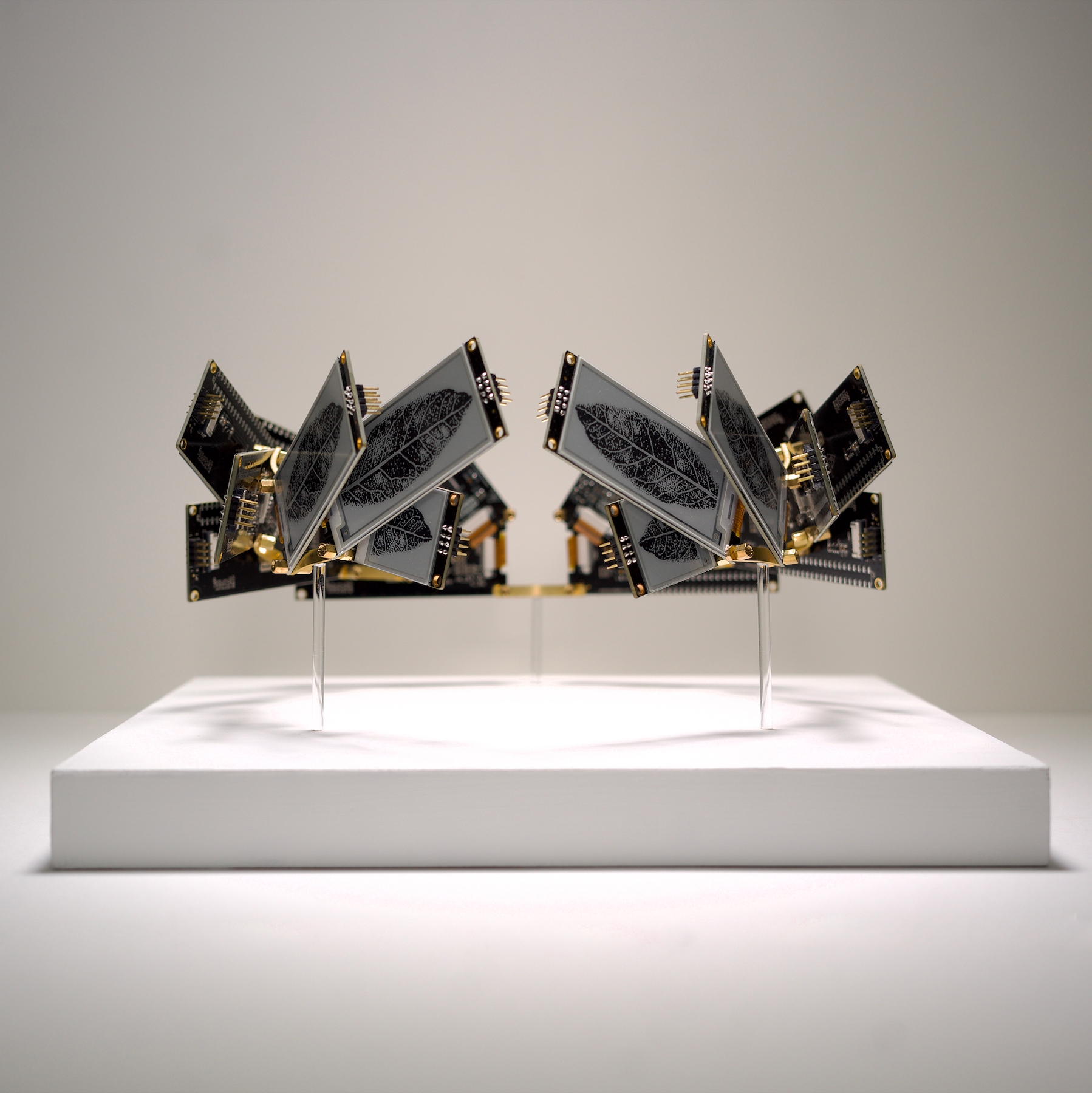
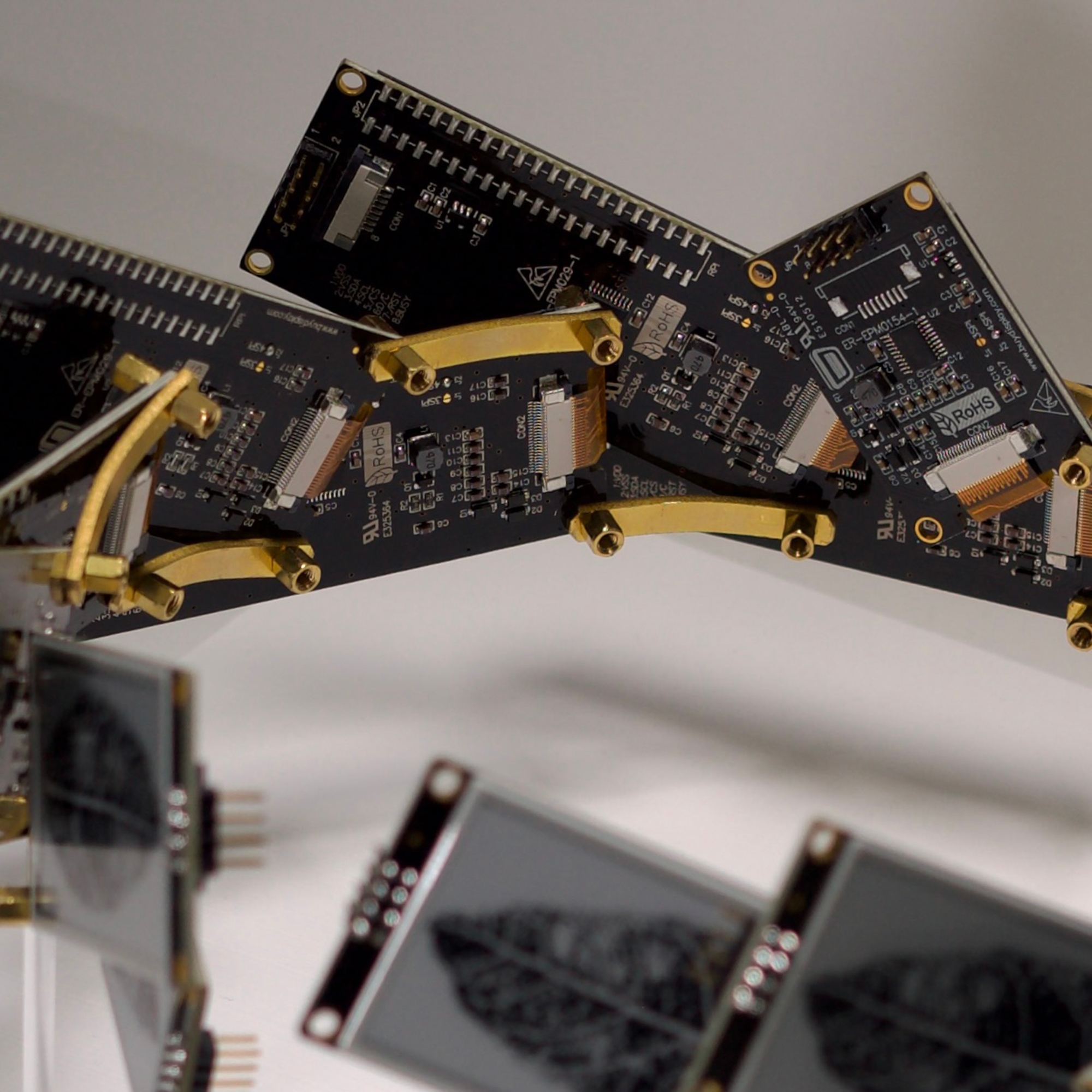
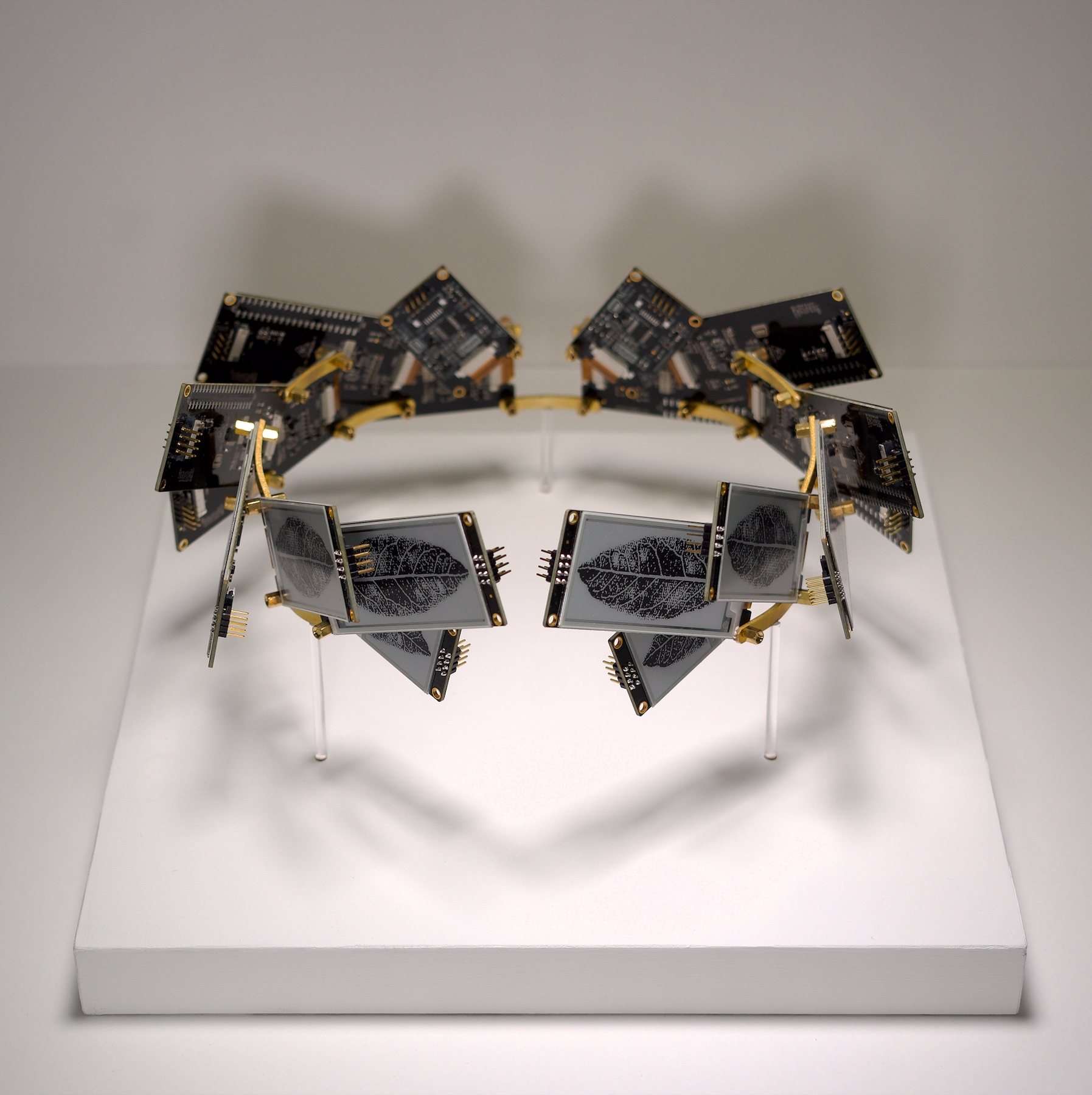
A Paper Crown II 2025
Electronic paper, PCB Board, brass, wood, and acrylic
11.8″ x 11.8″ x 6.7″ (300 mm x 300 mm x 170 mm)
Artist’s Statement: For millennia, kings and queens have ruled under the symbol of the crown. Crafted from rare and precious materials inaccessible to ordinary people, the extravagance of a crown aims to show the divide between ruler and subject, making its wearer’s power visible. A crown is not an ornament—it is a declaration of authority, overseeing the claim of new territories and symbolizing dominion over lands far and wide.
Today, the conquest of land has shifted to a new frontier: the digital domain. Corporations now claim vast territories in social media, navigation, and retail. These modern rulers—self-crowned kings and queens of the digital age—wield their power not over physical landscapes but over virtual spaces.
This new digital sovereignty extends into my own life. Where I once had a choice in how I engaged with friends, family, and colleagues, I now find myself navigating a digital kingdom—one that shapes the most important aspects of my daily existence.
In response to this era of digital rule, I have created regalia fit for these contemporary monarchs. These crowns are crafted from electronic paper—a material that serves as both symbol and warning. In the digital realm, power is fleeting; a single update, a momentary glitch, or an algorithm change can erase entire empires. These screens can go dark at any time, leaving only an empty silhouette of authority—a stark reminder that digital power can vanish as quickly as it appeared.
Marcel Dirkes is a Paris-based multidisciplinary artist recognized for his semi-figurative paintings of cities around the world and his innovative sculptures crafted from electronic paper. Drawn to rhythm and repetition, Dirkes finds inspiration in the patterns of metropolitan architecture and the synchronized choreography of city sidewalks, where people move to the cadence of an unspoken routine. His work explores how identities are shaped by these structures and the often-unseen expectations to which we unconsciously conform. Dirkes invites viewers to consider the moments when these expectations loosen, allowing freedom and individuality to emerge.
Born in 1982 in The Netherlands, Dirkes studied medicine at Leiden University before working in the technology sector. Ultimately, he decided to end his career and further develop his practice in painting and sculpture. Now based in Paris, he exhibits his work in both Amsterdam and Paris.
Website
Instagram
Email
Jeong Hur
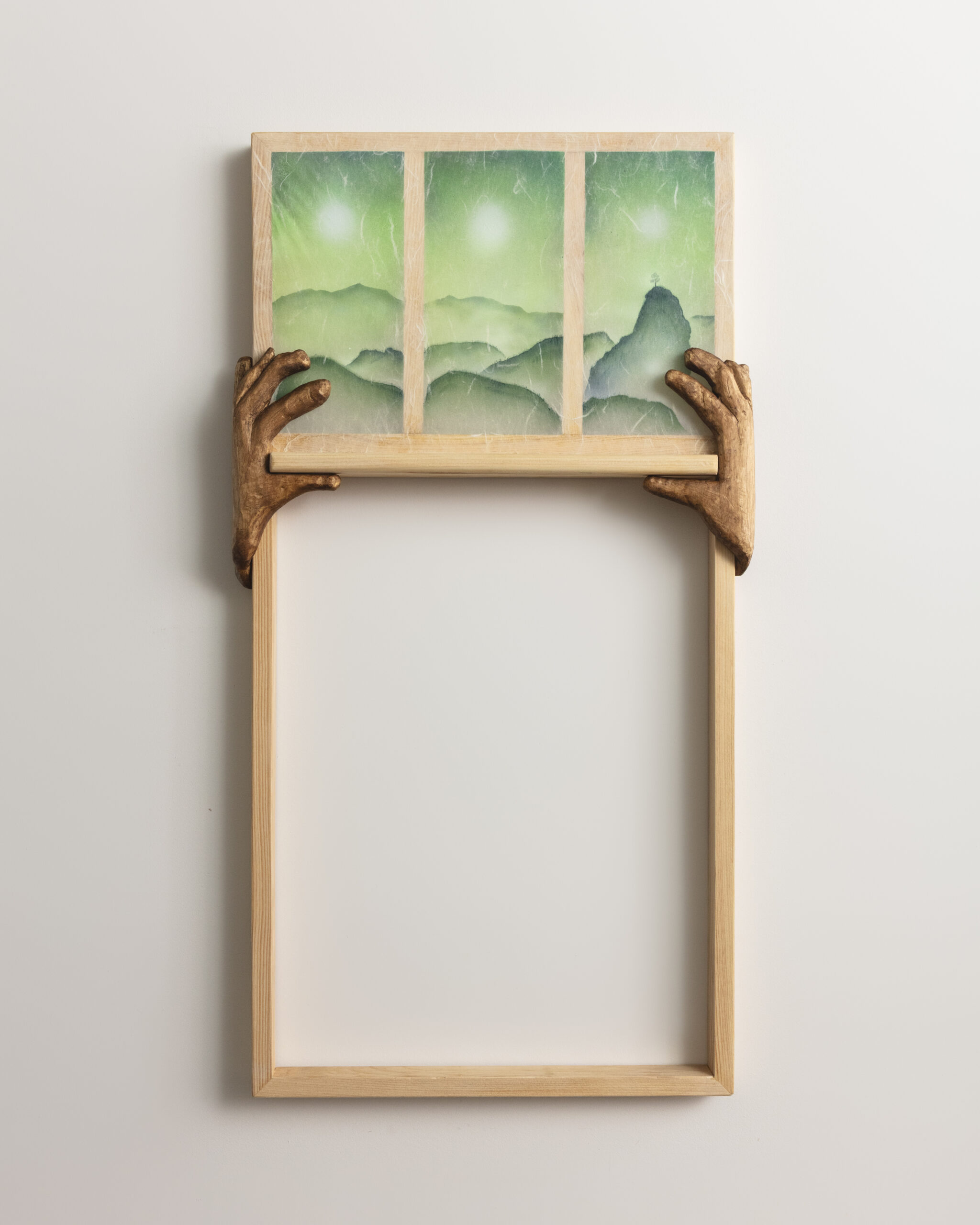
Opened Window 2025
Mixed media (wood, han-ji, and acrylic)
36″ x 19″ x 2.5″ (914 mm x 483 mm x 64 mm)
Artist’s Statement: This work acts as a quiet frame for what’s beyond—green hills painted in soft gradients and interrupted only by two sculpted hands. The piece reflects my ongoing investigation of perception, memory, and presence. The hands suggest an unseen figure, gently lifting or resting, caught between detachment and attention. The hanji softens the light, diffusing visibility, like memory does over time. It is less a window and more a pause: a place to look without certainty.
Jeong Hur is a Seoul-born artist based in Brooklyn, NY. Working primarily in sculpture and installation, his practice explores how perception is shaped through frames—physical, cultural, and psychological. Using pine wood and hanji paper, Hur constructs window-like structures that blur the boundaries between inside and outside, presence and distance, seeing and sensing.
His recent works incorporate hand-carved forms that press against or rest beside architectural frames—gestures that hold memory, tension, and quiet resistance. Through these subtle disruptions, he invites viewers to pause, look slowly, and inhabit the stillness between clarity and ambiguity.
Hur holds an MFA from the School of Visual Arts in New York and has exhibited internationally in the U.S., France, Germany, China, Japan, and Korea. His work has been recognized in photography and mixed media competitions and continues to evolve across materials and spatial contexts.
Gary LaPointe Jr.
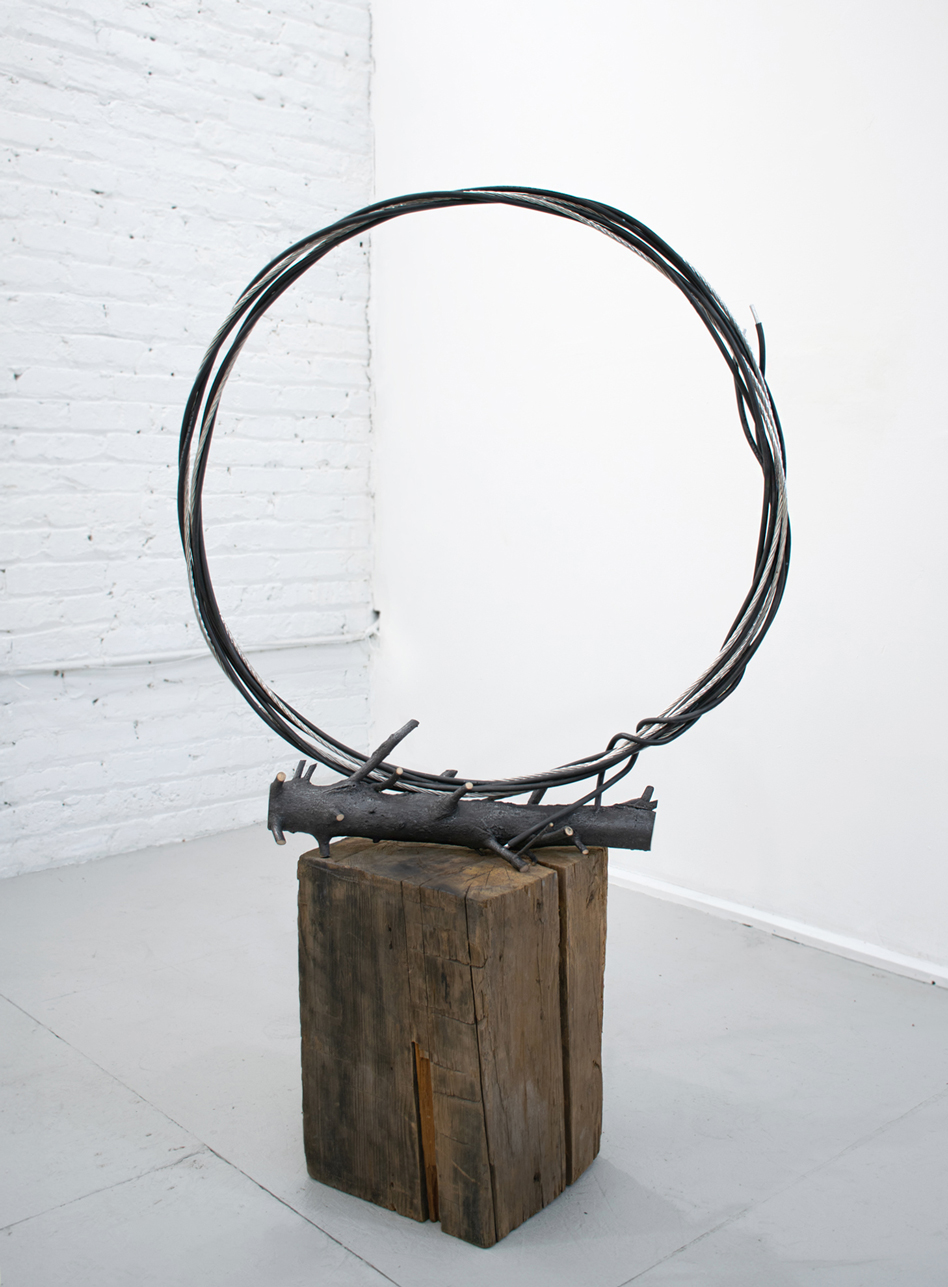
Pine Lasso 2024
Graphite-rubbed disregarded pine, found telephone wire, cedar, and hardware
48.5″ x 15″ x 28″ (1190 mm x 740 mm x 390 mm)
Artist’s Statement: Pine Lasso is a sculpture that intertwines themes of communication, environmental sustainability, transformation, and the complex relationship between technology and nature. By combining natural and industrial materials, this work prompts viewers to reflect on the intersections of materiality, history, and meaning. The piece speaks to contemporary concerns about environmental impact and how literal and metaphorical connectivity binds our world. It highlights the tension between preservation and transformation, challenging viewers to consider how objects, systems, and materials influence and shape our physical and conceptual realities.
Gary LaPointe Jr. ( 1991, USA ) graduated in 2016 from The School of the Art Institute of Chicago with an MFA in Sculpture, and was also awarded the 2016 Outstanding Student Achievement in Contemporary Sculpture Award from the International Sculpture Center. LaPointe has exhibited nationally and internationally with select solo and group exhibitions at Roman Susan (Chicago) Randy Alexander Gallery (Chicago) Galerie B-312 (Montréal) LVL3 (Chicago) EVERYBODY Gallery (Chicago) Heaven Gallery (Chicago) Lunder Arts Center
(Cambridge) Kunsthal Charlottenborg (Copenhagen) and at the Royal Academy of Arts (London). LaPointe is also featured in 100 Sculptors of Tomorrow, published by Thames and Hudson and BEERS Gallery (London) in 2019. He attended residencies at Skowhegan (2013) and the Wassaic Projects (2019). LaPointe had also received a Purchase Award from the Working Artist Organization in 2020. He currently lives and works in Chicago, IL.
LaPointe’s work grapples with the material constructs embedded in the shifting frameworks of our built and natural environments and within facets of identity. He produces sculptures, mixed-media works, and drawings that navigate and mine the material systems around us and question the relationships and rituals within them. His work does not adhere to a linear path but rather sheds light on diverse themes encompassing our changing environments, queerness and desire, and the construction and slippage of language, form, and materiality.
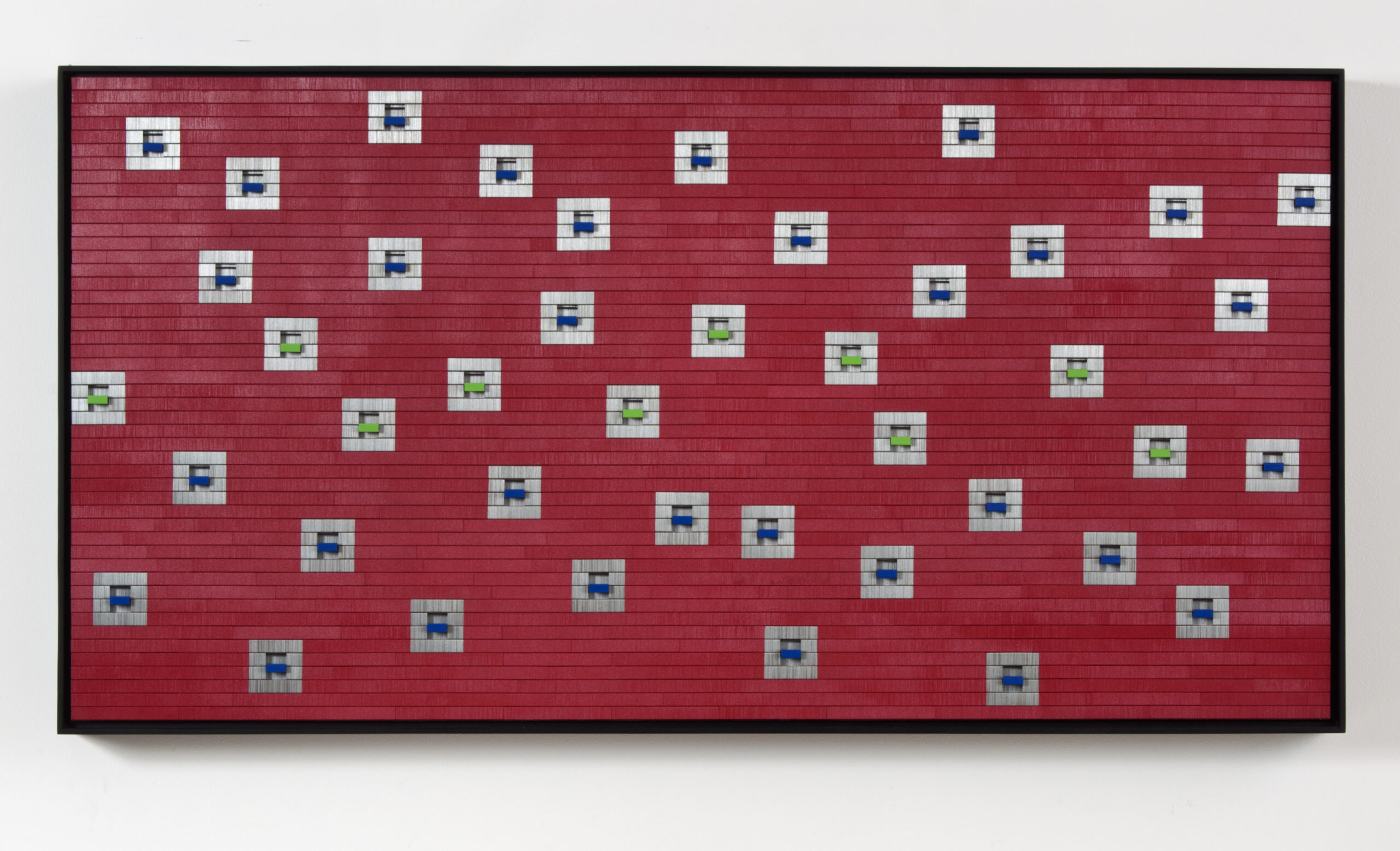
Carlo Marcucci
Staples VIII 2014
from Staples series
Staples, enamel, and paper clips on wood panel (framed)
49” x 25” x 3” (1245 mm x 635 mm x 76 mm)
Artist’s Statement: Staples is a body of work that evolved from Wheatfields and in many ways shares many similarities. They are abstract wall-mounted assemblages made of common office supplies and other supplies found at hardware store. As with the Wheatfield series, this body of work utilizes a repetitive modular approach using poor materials not intended for fine art production, to achieve elegant works that shed their humble origins.
Each row of staples is glued to a panel substructure—a single layer will create ribbed effect—a double layer will produce a smoother surface. Most of the staples are colored with common spray enamel and paired with other materials, such as erasers, Plexiglas, paper clips, ropes or Post-It notes, to break and accentuate the strong horizontal and vertical patterns that are congenital to the staples.
Italian-born artist Carlo Marcucci works as a painter (acrylic) and a sculptor (assemblages) in various styles that span from abstract to representational. His sculptural works are architectural and minimal—made of pasta, staples, and other unusual materials. His paintings are colorful, detailed, and subliminal.
Born in Florence and raised in Rome, Carlo moved to the United States where he studied at Oglethorpe University and graduated from the Atlanta College of Art (AKA SCAD Atlanta). After moving to Los Angeles, he worked as a signage designer for Disney Imagineering.
The theme that ties most of his works are environmental or inspired by emotional states.
Carlo has exhibited at the Lora Schlesinger Gallery (Santa Monica, CA), the Italian Institute of Culture (Los Angeles, CA), COPIA (Napa, CA), Korean Cultural Center (Los Angeles, CA), MOHA (Lancaster, CA), Memorial Art Gallery (Rochester, NY), Villa di Donato (Naples, Italy), Museum of Art & Design (New York, NY), Tokyo Metropolitan Museum (Tokyo, Japan), Kitakyushu Museum of Art (Fukuoka, Japan), UCLA Armand Hammer Museum (Los Angeles, CA), Los Angeles Municipal Art Gallery (Los Angeles, CA), LACMA/ARSG (Los Angeles, CA) and many more venues.
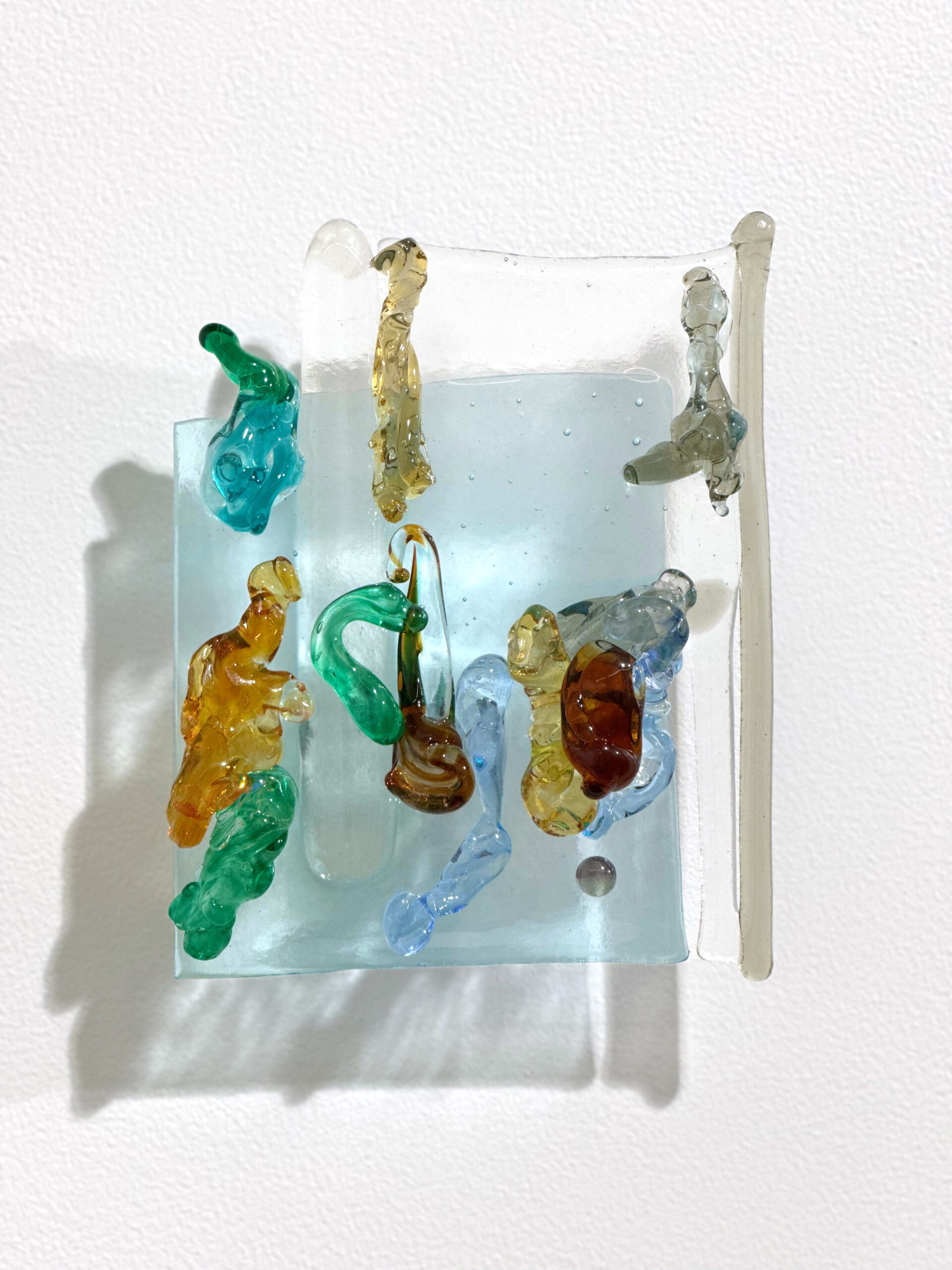
Donny Nie
Ice Bar 2025
from Glass Painting series
Lampworked and fused Effetre glass
7” x 6” x 1” (178 mm x 152 mm x 25 mm)
Artist’s Statement: Ice Bar is part of my Glass Painting series, supported by a 2024 Canada Council for the Arts Grant. The series utilize glass as a medium to encapsulate fleeting states of light, energy, and human emotion. Through small, intricate forms, they invite viewers into an intimate, contemplative mindscape. The works’ three-dimensional brushstrokes are aspiring objects suspended between ephemerality and permanence, metaphors for individuals navigating foreign or transitional environments. Their simultaneously intuitive and intentional gestures shimmer with an intuitive search for internal and external balances, embodying a constant negotiation between solitude and connection, stillness and transformation. The fused glass composition is a poetic embodiment of how relationships are formed, maintained, or dispersed, mirroring the intimacy and often fragility of community-building in familiar or alienated contexts.
Donny Nie (b. 1997, Foshan, China) is a Chinese-Canadian painter and interdisciplinary artist. Her research focuses on painting as her matrix, then expands into glass, ceramics, printmaking, and digital projections. The work manifests a compressed, puzzled archive of her migration and diaspora. Nie received a BFA from OCAD University, and an MFA from the School of the Art Institute of Chicago. She has taught at the University of North Texas. Nie is currently an Assistant Professor of Art at Knox College in Galesburg, IL. She had solo exhibitions in the United States, Canada, China, and Japan.
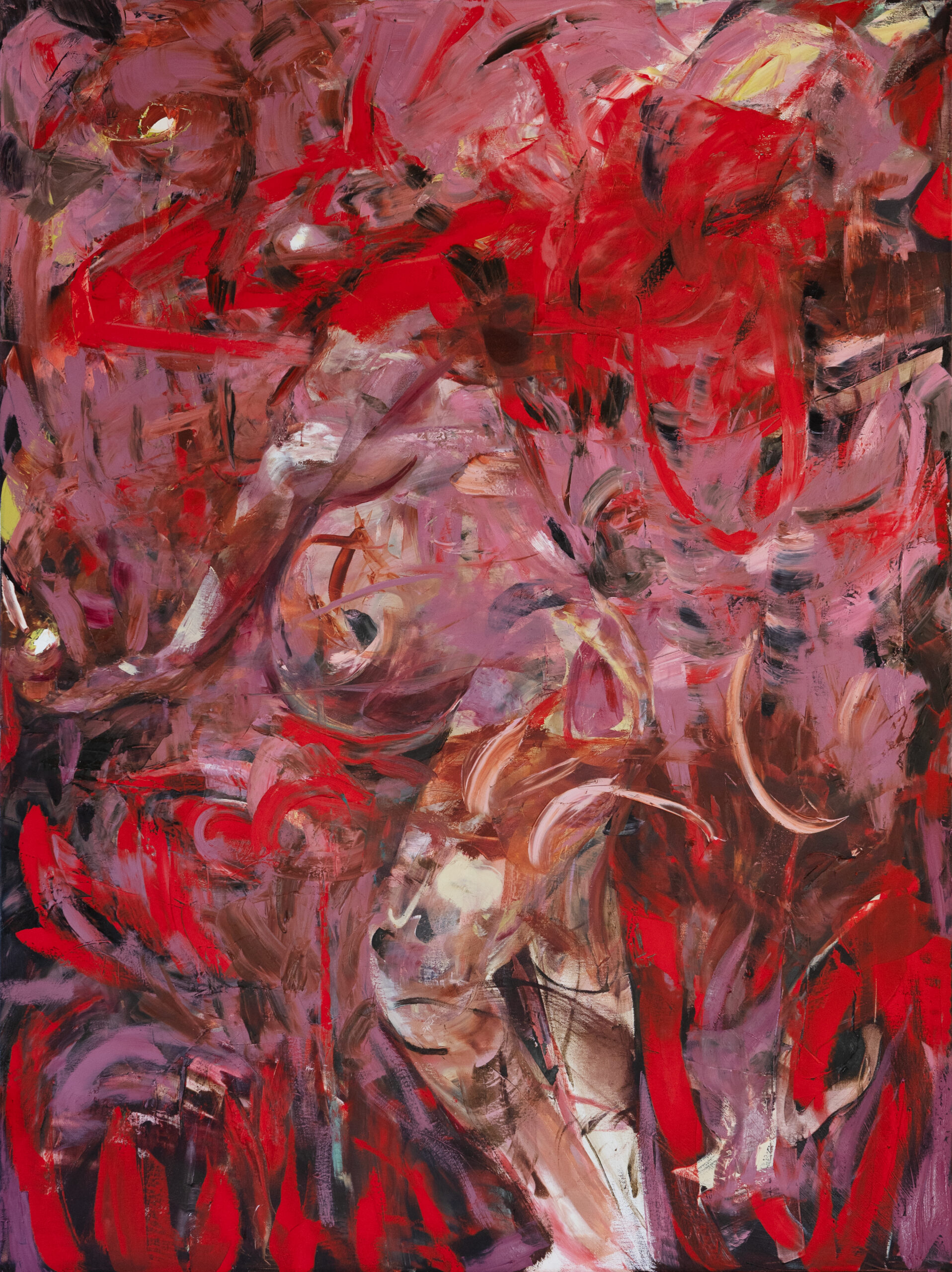
Michelle Silver
In the Belly of the Beast 2025
Oil on linen
40″ x 30″ (1016 mm x 762 mm)
Artist’s Statement: Michelle Silver paints emotional landscapes that combine steadied intention with bursts of full throttle frenetic motion. Sometimes figurative, sometimes abstract, her painted worlds exist in the space between the conscious and subconscious, in the area guided by intuition. Silver uses the intimacy and vulnerability of her experiences—often portraying a dream or memory—as a platform to connect larger themes of motherhood, trauma, mental health, desire, and fear.
In the Belly of the Beast explores the psychological terrain of embodiment, vulnerability, and transformation. Through gestural abstraction and a saturated palette, the painting evokes a visceral interiority—a place both monstrous and maternal. Figures emerge and dissolve within the chaos, reflecting the tension between self-preservation and self-erasure.
This work responds to the contemporary condition of being overwhelmed—by identity, by violence, by the body—and the instinct to survive it through metamorphosis. The beast is not only external; it is the self in flux. This piece challenges the viewer to confront discomfort and find agency within it.
Raised in the Catskill Mountains of New York, Michelle Silver (b. 1987) is a painter, curator and graphic designer living and working in the Hudson Valley, NY. She is the Gallery Director of Distortion Society, a combined art gallery and tattoo studio in Beacon, NY that she founded in 2023 with her tattoo artist husband Bradley Silver.
Silver has participated in group exhibitions throughout the United States and in London. She has had solo exhibitions at 1155 Avenue of the Americas, New York, NY hosted by ChaShaMa (2025), Distortion Society, Beacon, NY (2025), Super Secret Projects, Beacon, NY (2023), and Greenpoint Gallery, Brooklyn, NY (Awarded, First Place – 2015). Silver has been commissioned by Chase Contemporary, NYC, is featured in the Visionary Projects Directory, NYC and her work is part of the Fidelity Investments Corporate Art Collection. Her painting and curation have been included in publications such as The New York Times, Hyperallergic, Cool Hunting, Arts to Hearts Project, Times Union, Two Coats of Paint, Art Business News, The Highlands Current, and Chronogram.
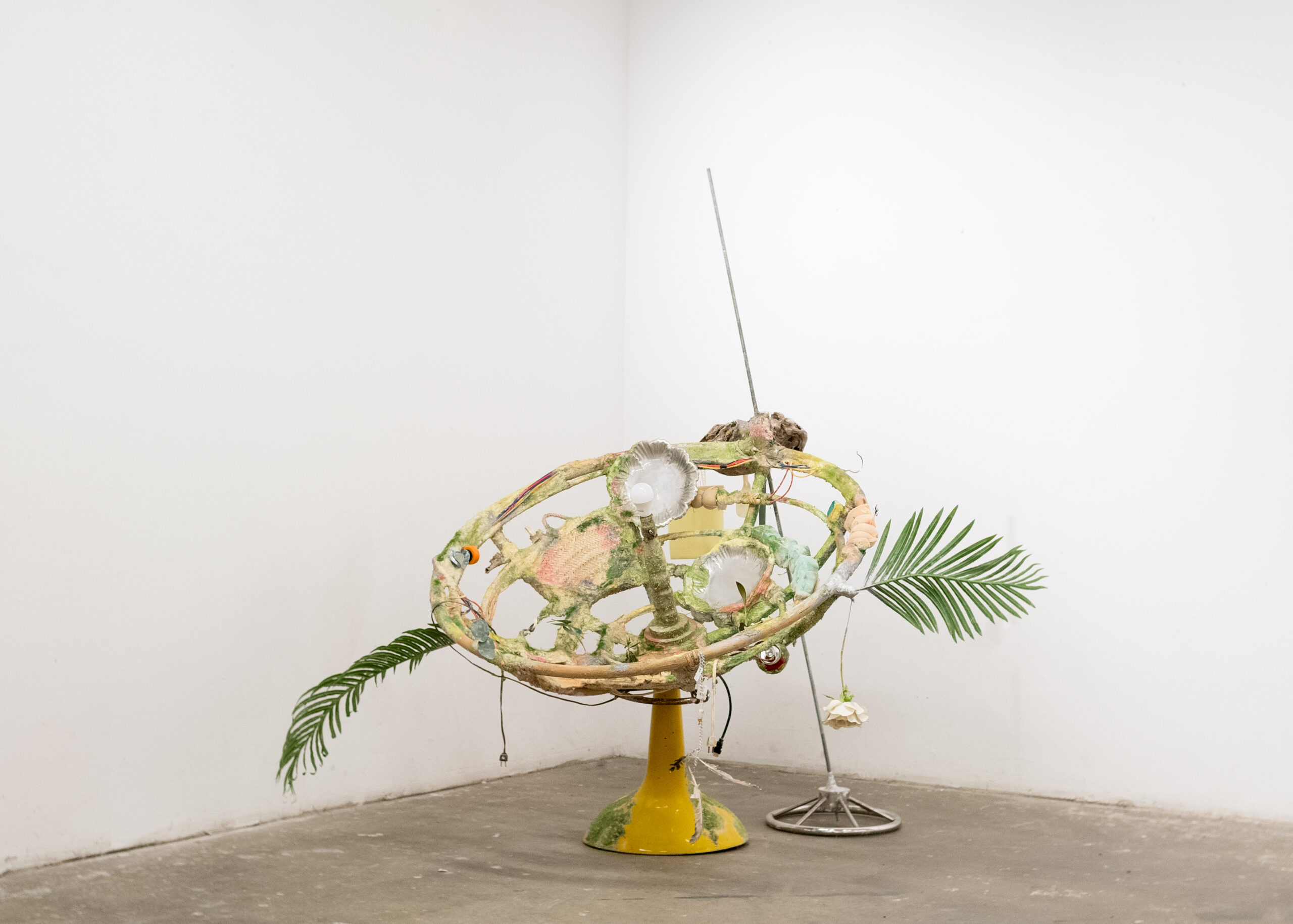
Rosalie Smith
SH.18 Communication Receiver 2025
Papasan chair, bar stool, threaded rod, driftwood, back scratcher, rice paddle, Mother of Millions plant, Purple Heart plant, canteen, lab-grown crystals, silver platters, Mallorcan basket, vape, buzzball, artificial palm frond, artificial rose, artificial eucalyptus, matches, chain, pigeon feathers, bread tabs, caster, foam, steering wheel, cables, clothes hanger hook, plastic gua sha, found jaw bone, wax, debris, dust, model-making grass flock, aluminum paint, and acrylic paint
6″ x 5″ x 5.5″ (152 mm x 127 mm x 140 mm)
Artist’s Statement: The title of this work is comprised of my mother’s initials and the year she died. It is comprised of hundreds of objects, embedded in plaster, wax, and dust onto the frame of a papasan chair, merged with a functional lamp and bar stool to create the shape of a satellite.
When my uncle disappeared in 2017, I began thinking about satellites as hyper-powerful communication devices, perhaps strong enough to reach him. I had the idea then to make one but it never came to fruition. When my mother died, a year later, I began working with the objects she left behind. The lamp in this sculpture was hers. This piece acts as both a tribute to her and embodies a desire to reach her, while also participating in the broader narrative of my work, which involves a post-human future in which the human body has devolved into growths upon waste, merging with plant life.
In spite of my at times bleak subject matter, I strive to access excess, color, and joy in my sculptures. To achieve this, I rely heavily upon intuition to guide my work to simultaneously embody whimsy and delight in the context of dystopian storytelling. I access this through hours at the studio, my “reps,” through which I begin to access a spiritual release. In this state my decisions are no longer entirely mine, tapping into a greater consciousness. Or perhaps they are entirely mine, in that I am able to forget external inputs and pressure.
Rosalie Smith is an interdisciplinary artist working primarily with found materials. Her sculptures imagine a post-human world in which the 99% of us have devolved into growths upon piles of often tech related trash, after the 1% have jetted to Mars. Smith depicts an unsexy singularity between humans and technology; i.e. microplastics magnified to microplastics, like an old phone receiver grafted into flesh. With a whimsical, absurdist tilt, her sculptures are inspired by the notion of navigating ecological crises with assemblage gadgets and vehicles.
Her work has been shown internationally, notably including venues such as NADA Curated, The Ogden Museum of Southern Art, The Contemporary Arts Center (New Orleans), Southeastern Louisiana University, and the Carroll Gallery of Tulane University. Her work has been written about in Art in America, Burnaway, and WhiteHot, among other publications. She has forthcoming exhibitions at MAMA projects, VSOProjects, Upstate Art Weekend curated by Anne-Laure Lemaitre, and Studio Underground curated by Xandra Beverlin of Pace Gallery and Pulse Projects, among others. She is currently finishing her MFA at CUNY Hunter.
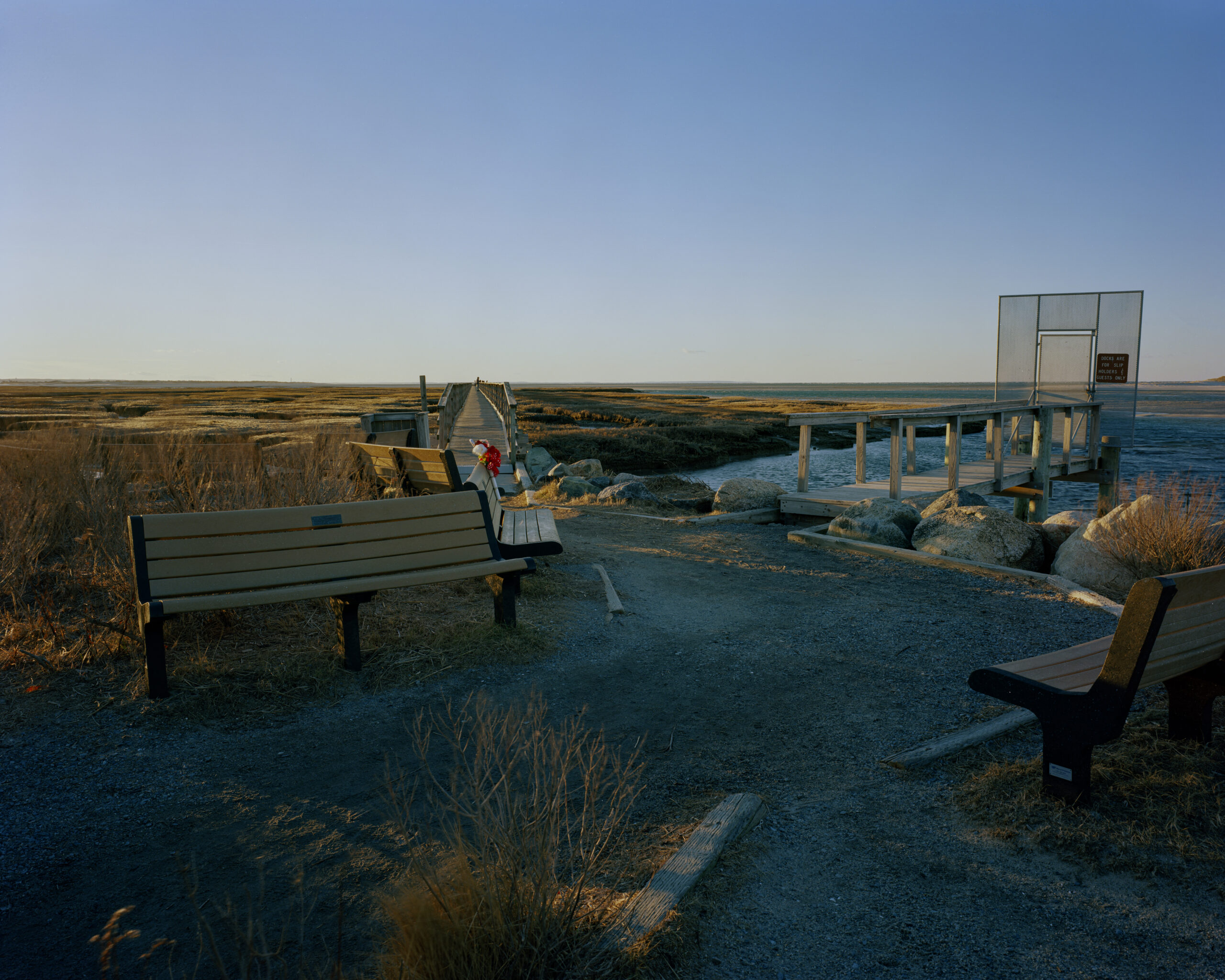
Feijia Yu
Tide Carved, Time Held 2025
Inkjet print
36″ x 45″ (914 mm x 1143 mm)
Artist’s Statement: I came to Gray’s Beach on Valentine’s Day—a date marked by gestures of affection but also by the quieter reverberations of memory. The late winter light draped gently over the marsh, and in its hush, I found a small bouquet of artificial flowers resting near the boardwalk. It wasn’t just decoration. It was evidence—of someone’s love, someone’s loss, someone choosing this exact place to remember.
The wooden boardwalk at Gray’s Beach is more than a scenic path across the salt marsh—it is a public archive of private lives. Each plank beneath my feet bears a name carved into weathered wood: dedications, memorials, weddings, silent elegies. This place has been rebuilt after storms, preserved by a community that understands grief and love are not opposites but companions.
That day, with the wind rolling in from the bay and the marsh hushed by cold, I felt time settle in layers—1912 and 1978 and now—folded into one present moment. The boardwalk, which was first extended over a century ago, has become a pilgrimage site for scenic views and memories to take root. It invites people to return—not to relive the past but to walk alongside it.
I chose large-format films to honor the weight of these stories. The process is slow, deliberate, and reverent, like placing a flower on a bench or carving a name into timber. In that gesture—on that day—I witnessed how love lives in celebration and persistence. It outlasts seasons. It outlasts storms.
Gray’s Beach reminded me: we are temporary, but our love—if offered with intention—can leave marks that last. And sometimes, on a quiet February afternoon, the landscape answers back.
Feijia Yu is a Chinese landscape photographer and now a Junior student at the School of Visual Arts (SVA). He primarily works with 4″ x 5″ color large format film. Through photographing landscapes, he conveys a unique emotional experience to the viewer. He dedicates about a week to the creation of each piece, incorporating the local cultural background into his images. As a result, each photograph allows viewers to read a story, glimpse a culture, and feel an emotion.